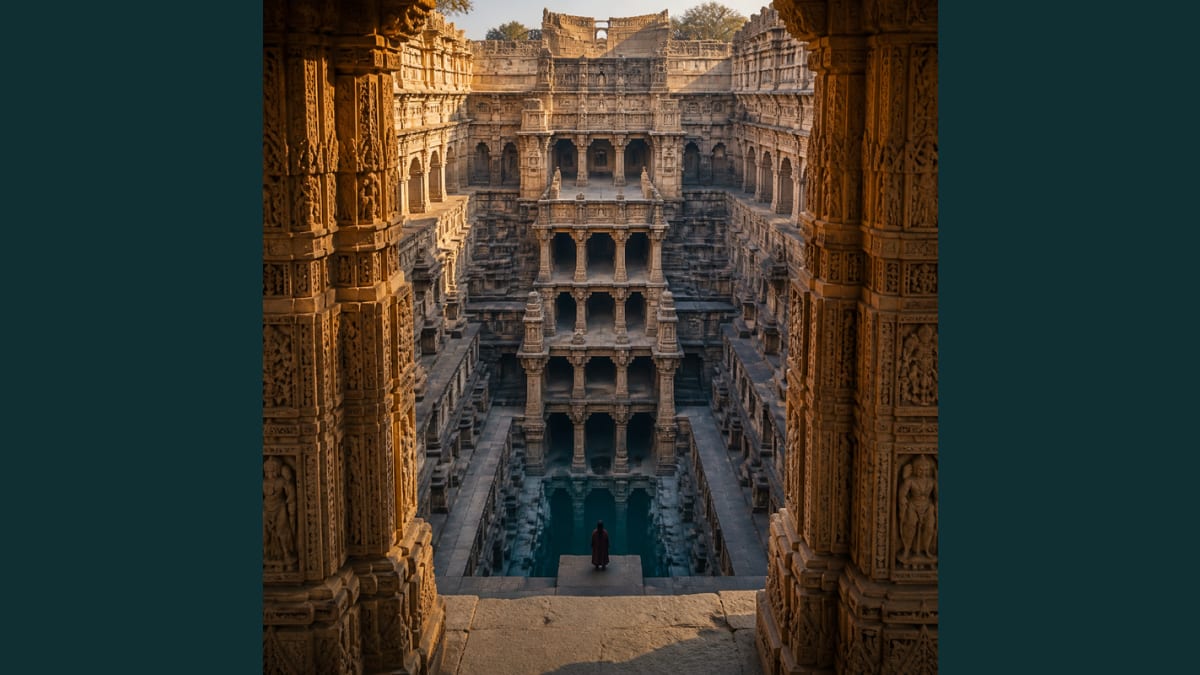
Rani-ki-Vav: Why Gujarat's Stepwell Feels Like an Underground Temple
A guide to looking closely at Patan's remarkable water architecture
Explore Rani-ki-Vav in Patan through its descending spaces, carvings and water heritage, with a practical checklist for a more rewarding visit.
An architectural surprise beneath the surface
Most monuments ask you to look up. A stepwell asks you to look down. At Rani-ki-Vav in Patan, Gujarat, descending spaces and carved pillars make water architecture feel ceremonial. UNESCO inscribed the site in 2014. Its description presents an eleventh-century memorial, designed as an inverted temple that celebrates the sanctity of water. The idea changes how you notice the structure: the descent itself becomes part of the experience.
Notice repetition before individual detail
Start with the overall rhythm of levels, pillars and openings. Then choose one carved panel and spend a minute looking closely. How does sunlight change the relief? Which details remain in shadow? Gujarat Tourism highlights the stepwell's Maru-Gurjara architecture and sculptures, many connected with Vishnu's manifestations. You do not need to identify every figure to appreciate the patience and skill visible in the stone.
Read it as water heritage
A stepwell belongs to a history of designing around water, but a modern visitor should avoid inventing engineering facts from a photograph. Use on-site interpretation or a knowledgeable guide to understand what is documented at this particular place. Consider how access, shade, movement and ornament relate to each other. That combination is what makes an infrastructure story as engaging as a palace or temple visit.
Build a slow Patan outing
Our editorial suggestion is to give the monument an unhurried morning or afternoon, then leave time for a local craft or food stop rather than rushing to another distant city. Confirm opening hours, ticketing and accessible areas with official visitor information before departure. Wear suitable footwear, carry water and follow barriers. Historic stairs can demand more care than the photographs suggest; check arrangements if someone in your group has limited mobility.
Make your photographs tell a story
Try three frames: one showing the overall depth, one revealing the repeating architecture and one recording a permitted detail. Add the place name when sharing them, and distinguish a modern artistic image from a real visitor photograph. Do not climb onto carvings or cross a barrier for symmetry. The best souvenir is often a detail you learned to notice, rather than the most dramatic angle.
Sources and illustration
References: UNESCO's Rani-ki-Vav entry and Gujarat Tourism's visitor page. The cover is a Canva AI-generated stepwell-inspired illustration; it is not an exact depiction or a photograph of Rani-ki-Vav.
UNESCO: Rani-ki-Vav: https://whc.unesco.org/en/list/922/
Gujarat Tourism: Rani Ki Vav: https://gujarattourism.com/north-zone/patan/rani-ki-vav.html